

Straddle in Cash Games: How Effective Stacks, Position and Preflop Ranges Change
A straddle can make an ordinary cash game feel very different without changing the nominal blinds shown on the table. Once an extra blind bet is posted before the cards are dealt, the pot starts larger, players have fewer effective betting units behind, and the normal preflop order may change. A £1/£2 game with a £4 straddle is therefore not strategically identical to the same £1/£2 game without one. Players who continue to think only in terms of the original £2 big blind can easily overestimate how deep they are, enter too many pots with speculative hands or misjudge their position. The practical adjustment is not simply to “play bigger pots”. A straddle changes the relationship between stack size, position and hand strength, which means opening ranges, calls and 3-bets all need to be considered in the new structure.
How a Straddle Changes Effective Stack Depth
A standard straddle is a blind bet placed before the cards are dealt. In many live cash games the most familiar version comes from under the gun and is twice the big blind, although the exact amount and permitted positions depend on the house rules. If the blinds are £2/£5 and the UTG player posts £10, the hand effectively begins with three forced or blind contributions: £2 from the small blind, £5 from the big blind and £10 from the straddler. Players who want to enter the pot must now call or raise relative to £10 rather than £5. That single change immediately increases the amount of money in the middle and raises the cost of every normal preflop decision.
The clearest way to understand the effect is to measure the effective stack against the straddle rather than against the original big blind. Suppose two players each have £1,000 in a £5/£10 game. Without a straddle, their effective stack is 100 big blinds. If somebody posts a £20 straddle, the same £1,000 now represents only 50 straddles. No chips have disappeared from either stack, but the relevant starting bet has doubled. From a strategic point of view, the hand therefore behaves much more like a 50-unit-deep pot than a 100-big-blind pot. This is one reason straddled pots can reach large sizes after only a few betting decisions.
Effective stack depth always refers to the smaller stack involved between the players who can contest the pot. If you have £1,500 but the opponent who calls your raise has £700, the meaningful stack between you is £700. With a £10 straddle, that is effectively 70 straddles; with a £20 straddle, it is only 35. This distinction becomes especially important in live games where stacks can vary considerably around the table. A player may look deep compared with the printed blinds while actually being relatively short compared with the active straddle. Before choosing a hand or raise size, it is therefore useful to convert the effective stack into straddle units rather than continuing to rely on the original big blind.
Why Shallower Effective Stacks Change Hand Value
Hands that depend heavily on implied odds usually lose some appeal when effective stacks become shallower. Small pocket pairs are a simple example. Part of their attraction at deep stacks comes from the possibility of flopping a set and winning a large amount from a strong one-pair hand. If the effective stack has been reduced from 150 big blinds to 75 straddles, there is less money available behind when the set arrives. The same principle applies to some suited connectors and suited gappers. They can make strong straights and flushes, but they often need room for several streets of betting to realise their full value. A straddle reduces that room even though the cards themselves have not changed.
Strong high-card hands often become easier to play by comparison. Holdings such as A-K, A-Q, K-Q and strong pairs do not depend as heavily on winning a very large pot after making a disguised hand. They frequently begin with substantial raw equity and can make strong top pairs or overpairs. When stacks are effectively shorter, those qualities matter more because fewer bets may be needed before a large portion of the effective stack is already committed. This does not mean every broadway hand should automatically be played aggressively, but the balance between immediate hand strength and speculative potential shifts towards hands that can make strong pairs and continue comfortably in larger preflop pots.
The change is easiest to see with a simple comparison. Imagine a player holding £600 in a £1/£3 game. Without a straddle, the stack is 200 big blinds deep, leaving considerable room to call raises with hands that may perform well in deeper pots. With a £6 straddle, the same player is effectively 100 straddles deep. If the game uses a £12 straddle instead, that stack falls to only 50 straddles. A call that looks inexpensive when measured against the £3 big blind can therefore represent a much larger share of the strategically relevant stack. Good decisions begin with recognising this new depth before considering the individual cards.
How the Straddle Changes Position and Preflop Action
The classic UTG straddle changes the normal preflop order because the straddler has already placed a live blind bet. In a conventional game without a straddle, the under-the-gun player acts first before the flop. When that player posts a live UTG straddle, action normally begins with the player immediately to the straddler’s left, while the straddler receives an opportunity to act later when the action returns. The exact procedure should always be checked with the dealer because cash-game rules are not identical everywhere. What matters strategically is that an extra player now holds a live investment behind the opener, so the table no longer behaves like an ordinary two-blind preflop structure.
This has a direct effect on position. Consider a nine-handed table where the UTG player has straddled. The next seat is technically the first player to make a voluntary decision, but that player now has the rest of the table plus the straddler still to consider. A late-position player faces a similar change. The button may still have excellent postflop position, yet an UTG straddler remains behind preflop and can call, raise or re-raise when action reaches them. The button is therefore not attempting to steal only the small blind and big blind. There is another live bet to get through, and that extra player can meaningfully reduce the profitability of marginal opens.
Button and Mississippi straddles can alter the order in a different way. Under some Mississippi rules, a straddle may be placed from positions other than UTG, and action begins to the left of the straddler. A button straddle can therefore force one of the blinds to act very early before the flop while allowing the button to retain a powerful position later in the hand. Other card rooms use different button-straddle procedures, so assumptions based on another casino or home game can lead to mistakes. Before playing, it is worth confirming who is allowed to straddle, how much they may post, who acts first and whether the straddler receives the final preflop action.
Why Position Becomes More Valuable in Larger Straddled Pots
Position matters in every form of no-limit hold’em, but its practical value becomes especially visible when the pot is already enlarged before anyone has seen their cards. A player acting later has more information about who has entered the pot, who has raised and how large those bets are. When the initial pot is bigger, mistakes made out of position can also become more expensive because later bets are usually based on a larger pot. This is one reason marginal hands that might be acceptable as late-position opens can become unattractive when played from an early seat in a straddled hand. The player is risking more while having less information.
The blinds deserve particular care because a straddle does not automatically make their hands better simply because they have already invested chips. In fact, some straddle formats create uncomfortable situations for the small blind and big blind. They may face a larger amount to continue and still have poor postflop position against several opponents. Defending simply because money has already been posted can therefore lead to too many weak calls. The correct comparison is between the price being offered, the strength and playability of the hand, the likely ranges of the other players and the effective stack. The original blind contribution is already in the pot and should not by itself justify continuing.
Late position remains attractive, but it should not be confused with permission to open almost any two cards. An UTG straddle adds another live player who can defend or re-raise, and that reduces the success rate of a pure steal. A practical rule for many players is to treat an UTG-straddled pot roughly as though one extra blind were still waiting behind them. This naturally removes some of the weakest offsuit hands and low-value suited holdings from an opening range. The adjustment does not need to be extreme. Its purpose is simply to recognise that the opener must pass through more resistance than in an ordinary pot with only the small blind and big blind remaining.
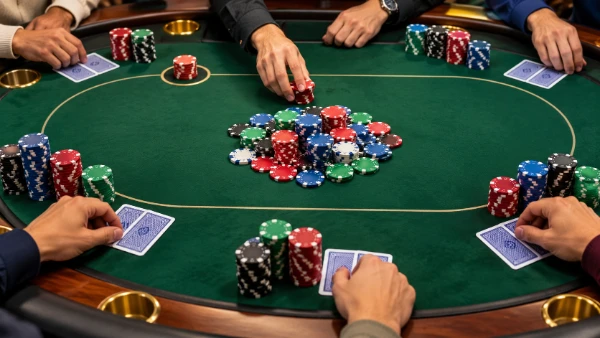
How Preflop Ranges Should Adjust in Straddled Cash Games
The most common mistake is continuing to use exactly the same opening ranges as in an unstraddled game. With an extra live bet and a shallower effective stack, many positions should generally become somewhat more selective. The adjustment is most noticeable in seats that normally rely on stealing the blinds with a wide range. A cutoff or button that opens many marginal hands in a standard game now has an additional player capable of defending. Hands with poor domination characteristics, weak offsuit aces, marginal offsuit kings and the weakest suited holdings therefore become less appealing. Strong hands remain strong, while borderline opens require more attention to the players behind.
Early-position ranges should also reflect the effective depth. A hand such as a small pocket pair may still be playable in the right game, but its value depends on the price, expected number of callers and money remaining behind. Calling or raising purely because the same hand would be standard at 150 or 200 big blinds ignores the effect of the straddle. Medium and strong pairs, suited broadways and high-card combinations generally retain their value more reliably because they can make strong hands without requiring unusually large implied odds. The goal is not to replace every normal range with a completely new one, but to remove hands whose profitability depended heavily on deeper stacks or fewer players left to act.
Raise sizing should also be considered in relation to the straddle rather than the original big blind. In a £2/£5 game with a £10 straddle, a raise to £25 is 2.5 times the straddle even though it is five times the printed big blind. Looking only at the £5 blind can make an ordinary open appear unusually large. Live games often use larger sizes because callers are frequent, while tighter games may function well with smaller multiples. There is no universal number that works at every table. The important point is consistency: think of the £10 straddle as the current reference bet, then adjust for position, stack depth, previous callers and how readily the opponents continue.
Opening, Calling and 3-Betting Without Overcomplicating the Strategy
For opening decisions, a useful starting point is to tighten the weakest part of the range rather than rebuilding everything from scratch. If a hand is already a clear raise in a normal pot, it will often remain one when straddled. The first candidates to remove are usually hands that were only slightly profitable because they relied on stealing the blinds or seeing inexpensive flops. On the button, for example, strong aces, pairs, broadway combinations and good suited hands remain natural candidates to enter the pot, while very weak offsuit holdings can be discarded more readily. Earlier positions should remain more disciplined because there are more players capable of waking up with a strong hand.
Cold-calling deserves particular attention. A straddled pot is already larger, so calling a raise can consume a meaningful percentage of the effective stack before the flop. Speculative calls with small pairs or low suited connectors become less attractive when there is insufficient money behind to compensate for the many occasions on which the flop misses. Position can make a major difference: a playable suited hand on the button may justify a call against the right opponent, while the same hand from a blind can be much harder to realise profitably. Multiway potential, rake, opponent tendencies and raise size all matter, so a hand should not be called merely because it looks attractive in isolation.
3-betting should follow the same practical logic. Strong value hands can usually be raised confidently because the larger starting pot gives more immediate reward for building the pot or taking it down before the flop. At the same time, very loose bluff 3-bets deserve caution when effective stacks are short. A large 3-bet can commit a substantial portion of the available chips, leaving less room to abandon the hand later. Against players who call too often, a more value-focused approach is usually straightforward and effective. Against opponents who open too widely and fold frequently, selective bluffs can still have a role. The central adjustment is to base every preflop decision on the straddle-sized game actually being played, not on the smaller blind structure printed on the table.
Popular topics
-
 Is poker a game of chance?
Card games attract the attention of players today. And …
-
 Poker Trends 2025: From Short-Stack H...
Poker in 2025 continues to evolve through format innovation, …
-
 Rules of Texas Hold’em
Poker is booming and many gambling establishments now allow …